Most business websites in Ghana are launched and then forgotten. Two years pass. The homepage still shows a promotion that ended in 2024. The phone number no longer works. The site takes 9 seconds to load on a phone. And somewhere, a potential customer opens it, waits, and closes the tab.
The real question: is your website costing you customers right now?
This article will help you answer that. Not with a generic list of redesign tips copied from an American blog, but with a diagnostic approach that makes sense for a Ghana business.
Your website needs a redesign if it has three or more of these problems: it loads slowly on mobile, the design looks outdated, visitors are not converting into inquiries, or your business has changed but the site has not.
If the structure and content are still solid but the visuals feel stale, a refresh (new colours, updated photos, fresher content) may be enough. A refresh costs 40 to 60 percent of a full redesign.
If your website is driving customers away, the money you lose each month is almost certainly more than the cost of fixing it.
Who owns your website?
Before you evaluate your design, load speed, or mobile experience, check one thing first: who actually controls your domain and hosting.
Here is how it goes wrong. A business owner hires someone to build a website. That person registers the domain, sets up the hosting, and builds the site. Everything is under their account. The business owner pays and moves on. Two years later, the relationship sours. The developer disappears. The domain expires and the owner cannot renew it because it was never in their name. The website goes dark.
Or worse: the developer registered the domain in their own name and now claims ownership of it. The business owner has to negotiate to get their own domain back.
This happens in Ghana more than it should. Before you invest in a redesign, verify that your domain and hosting are registered in your name, with your email, under your account. If they are not, fix that first. A redesign is pointless if you cannot control the site when it is done. Any reputable web design company will set things up in your name without being asked. If a provider resists this, walk away.
What a bad website costs you
Over half of mobile users will leave a site that takes longer than 3 seconds to load. In Ghana, where most internet traffic comes from phones and mobile data is paid for by the megabyte, a slow or broken website does not just fail to impress. It actively repels customers.
Here is what happens when a Ghana business keeps a decaying website:
Visitors leave before the page loads. Over half of mobile users abandon a site that takes longer than 3 seconds to load. In Ghana, where many users are on MTN or Telecel data bundles and network speeds vary, a bloated homepage can take 8 seconds or more. Every second past 3 costs you visitors.
They judge your business in under a second. Users form an opinion about a website in 0.05 seconds. That number comes from a peer-reviewed study at Carleton University, published in Behaviour and Information Technology. If your site looks old, cluttered, or broken in that first flash of recognition, the visitor has already decided your business is not serious before they read a single word.
They do not come back. If a visitor has a bad experience on your site, they are unlikely to return. They will find a competitor whose site works. In Ghana, where word of mouth and WhatsApp referrals drive a lot of business, a bad website does double damage. It loses the direct visitor and it loses the people they would have told about you.
You become invisible to AI search. This is new and specific to 2026. Google now surfaces AI Overviews for many commercial searches in Ghana. ChatGPT and Perplexity cite businesses when answering questions like “who builds websites in Accra.” If your site is old, unstructured, or lacking clear information, these tools will not cite you. The visitors who rely on them, and their numbers are growing fast, will never know you exist. Semrush research found that AI-referred visitors convert at roughly 4 times the rate of regular search visitors. Losing this channel is expensive.
Refresh or redesign
Not every website that looks tired needs to be torn down and rebuilt. The decision between a refresh and a redesign comes down to what is actually broken.
A refresh is enough when
The site structure makes sense. Pages are organised logically. The navigation is clear. But the visuals feel stale. The colour scheme was fashionable in 2019. The photos are stock images that appear on three other Ghana business websites. The content is still accurate but the wording feels flat.
A refresh updates the surface: new colour palette, better typography, real photography replacing stock images, fresher copy, updated testimonials, current team photos. The underlying structure stays the same. This costs roughly 40 to 60 percent of a full redesign and takes less time.
You need a redesign when
The problems go deeper than how the site looks. The mobile experience is broken. Pages take too long to load and the fixes are not simple. The site was built on an old platform that nobody can update anymore. Your business has changed (new services, new audience, new brand) and the site no longer reflects what you actually do. The conversion path (visitor lands, trusts you, contacts you) is not working.
A redesign is a structural project. It may involve changing the platform, rebuilding the information architecture, rethinking the user journey, and rewriting content from scratch. It costs more and takes longer. But if your site has deeper problems, a refresh will just put new paint on a sinking boat.
The signs to look for
Here are the specific things to check on your own website. Be honest. If you find three or more of these, you probably need a redesign, not a refresh.
It looks old next to your competitors
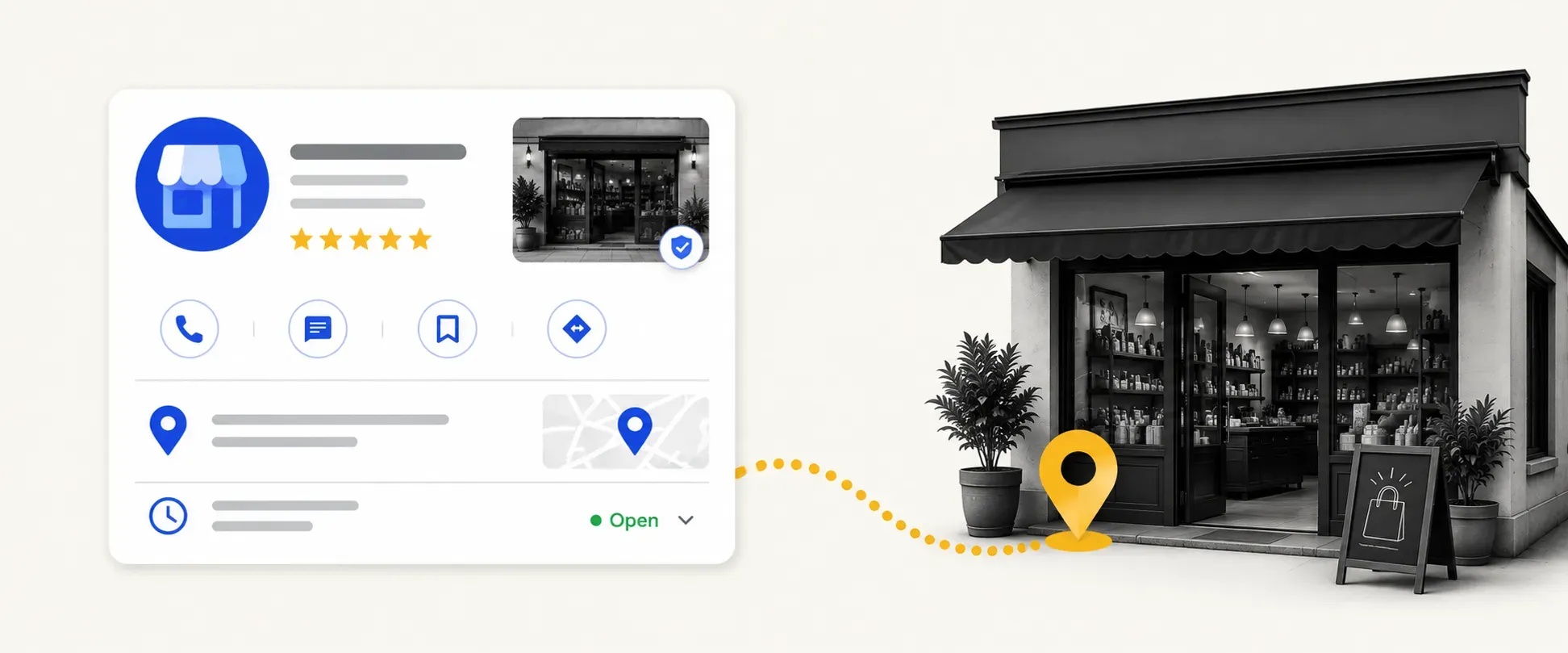
Open your website. Then open three competitors’ websites in new tabs. Switch between them. Be honest: does yours look like it belongs in the same year? If your site uses tiny text, cluttered layouts, or a design that was trendy when BlackBerry was still relevant, visitors notice. They may not consciously think “this design is from 2018.” But they feel it. And they leave.
It does not work properly on a phone
This is the most common fatal flaw in Ghana business websites. Open your site on your phone right now. Do you have to pinch and zoom to read the text? Are buttons too small to tap accurately? Does the menu collapse into something usable or does it become a jumble? Do images spill off the side of the screen?
If you answered yes to any of these, you have a mobile problem. Since roughly 70 percent of web traffic in Ghana comes from phones, a mobile problem means you are frustrating roughly 7 out of every 10 people who visit your site. Google also uses mobile-first indexing. A bad mobile experience drags down your desktop rankings too.
It loads slowly
Test your site on a phone using mobile data, not WiFi. Count the seconds until the main content appears. If it takes more than 3 seconds, you have a problem. If it takes more than 6, you have an emergency.
Slow load times in Ghana usually come from three sources: images that were never compressed, auto-playing video, or cheap hosting that cannot handle traffic. The fix might be simple (compress and reload images) or it might require a rebuild (the underlying code is bloated). Either way, test it now before you assume everything is fine.
Visitors are not becoming customers
You have a website. People visit it. But they do not call, email, or fill out your contact form. The traffic is there but the conversions are not.
This usually means one of three things: the call to action is weak or missing, the site does not build enough trust for someone to take the next step, or the contact process itself is broken (the form does not submit, the phone number is wrong, nobody replies to inquiries). Check all three. If the trust signals are missing (no testimonials, no SSL certificate, no clear information about who you are), a redesign that builds credibility into every page will do more for your business than any amount of advertising.
You cannot update it yourself
If changing a sentence on your homepage requires calling a developer who charges you GHS 200 and takes three days to respond, your website is a hostage situation. Modern websites should give you the ability to update text, swap images, and add new pages without touching code. If yours does not, a redesign onto a proper content management system will pay for itself in saved developer fees within a year.
Your business has changed but the site has not
You added two new services. You moved to a bigger office. Your branding evolved. Your team doubled in size. Your website still shows the old services, the old address, the old logo, and photos of people who left three years ago.
When a site and a business are out of sync, visitors feel the disconnect. They may not be able to name it, but they notice that something is off. More practically, they may call the old number or visit the old address and conclude you are unreliable.
What a redesign costs in Ghana
Website redesign costs in Ghana vary widely, but here are realistic planning ranges based on current market rates.
| Scope | Typical cost (GHS) | What you get |
|---|---|---|
| Small business refresh (5 to 10 pages) | 2,000 to 5,000 | Updated visuals, fresh content, mobile fixes, basic SEO |
| Small business full redesign | 4,000 to 8,000 | New design, restructured content, proper CMS, SEO, mobile optimised |
| Corporate or professional services redesign | 7,000 to 14,000 | Custom design, advanced SEO, lead capture, analytics, up to 20 pages |
| E-commerce rebuild | 10,000 to 18,000 | Product catalogue, cart, MoMo and card payments, inventory basics |
A partial refresh (new look, same structure) typically costs 40 to 60 percent of a full redesign. Ongoing maintenance runs GHS 1,500 to 3,000 per year for hosting, security updates, and content changes.
These are planning ranges, not quotes. The actual cost depends on how many pages you have, how much custom functionality you need, and how much content work is required. For a broader look at website pricing in Ghana, see how much a website costs in Ghana.
Do it yourself or hire someone
If your website is a simple brochure site (homepage, about, services, contact) and you have the time and willingness to learn, DIY platforms like WordPress with a good theme can work for a refresh. You will save on design fees. You will spend time instead.
But if your site has any of the following, hire a professional: custom functionality, e-commerce, multiple service pages that need structuring, a blog or resource section, serious mobile performance problems, or SEO work that needs technical expertise.
The middle ground that works for many Ghana businesses: hire a professional for the initial redesign (structure, design, platform setup, SEO foundations) and learn to handle content updates yourself going forward. You get a solid foundation without ongoing dependency. Most good providers will set this up for you.
When you are evaluating who to hire, ask specific questions: Who will own the domain and hosting account? What platform are you building on and can I update content myself? What is included in the price and what costs extra? Will you set up basic SEO? What happens after launch? For a full list of questions to ask, see how to choose a web design company in Ghana.
Redesign diagnostic checklist
Go through your website and check each of these. Count your yes answers.
| Check this | Why it matters | Yes / No |
|---|---|---|
| Site loads in under 3 seconds on mobile data | Over half your visitors leave if it does not. | |
| Looks clean and current next to three competitors | Visitors judge credibility on design alone. | |
| Works perfectly on a phone (no pinch-zoom, no broken layout) | Roughly 7 in 10 of your visitors are on mobile. | |
| Contact form works and someone replies within 24 hours | Broken forms and slow replies leak leads. | |
| SSL certificate is active (padlock in the browser bar) | Missing SSL scares visitors and hurts SEO. | |
| All promotions, dates, and prices are current | Expired promos make your business look abandoned. | |
| You can update text, images, and pages without a developer | If you cannot, the site is a cost centre, not an asset. | |
| Domain and hosting are registered in your name | If they are not, fix this before anything else. | |
| The site reflects your current services, team, and brand | A mismatch confuses visitors and costs trust. | |
| You are not embarrassed to share the URL | If you hesitate, your customers feel the same thing. |
How to read your score:
0 to 2 yes answers. Your site is in decent shape. Consider a light refresh if the visuals feel tired. Keep maintaining it and update content regularly.
3 to 5 yes answers. You have real problems that are costing you visitors and leads. A full redesign is probably the right call. Prioritise mobile performance and conversion fixes first.
6 or more yes answers. Your website is actively damaging your business. Every month you wait is a month of lost customers. Start the redesign process now. The money you lose each month almost certainly exceeds the cost of fixing it.
Frequently asked questions
How do I know if I need a redesign or just better marketing?
If your website gets decent traffic but few inquiries, the problem may be the site itself (weak trust signals, no clear call to action, broken contact form) or it may be that your marketing is bringing the wrong people. Check your analytics. If visitors are leaving quickly, the site is the problem. If they are staying but not converting, the conversion path needs work. If traffic is simply low, marketing is the gap.
Will a redesign hurt my Google rankings?
A poorly executed redesign can drop your rankings temporarily or permanently. A well-executed one should improve them. The key things that protect your rankings during a redesign: keep the same URL structure where possible, set up proper redirects for any URLs that change, do not remove pages that are currently ranking without redirecting them, and make sure the new site is faster, not slower, than the old one.
How long does a website redesign take in Ghana?
A small business redesign typically takes 4 to 8 weeks from kickoff to launch. A corporate or e-commerce redesign takes 8 to 14 weeks. The timeline depends on how quickly content and decisions are provided. The main bottleneck in most Ghana redesign projects is the client taking three weeks to send photos and approve a homepage draft.
What platform should my redesigned site be built on?
For most Ghana businesses, WordPress offers the best balance of flexibility, ease of updating, and cost. It powers over 40 percent of websites globally and has a large ecosystem of themes, plugins, and developers who know it. Custom-coded sites (like this one, built with Astro) are faster and more secure but require a developer for most changes. The right choice depends on how often you need to update content and whether you have ongoing technical support.
What if I just built my website last year?
If the site was built well and still reflects your business accurately, you probably do not need a redesign. But if it was built cheaply, without mobile optimisation, or on a platform you cannot update, the age matters less than the quality. A one-year-old site with broken mobile layout and no SSL is in worse shape than a five-year-old site that was built properly and maintained.