Many businesses in Ghana start looking for a proper website after spending a long time relying on Instagram, WhatsApp, or Facebook.
That is usually the point where choosing a provider becomes harder than expected. Several companies can promise a modern website. Fewer can explain the scope clearly, show relevant work, and tell you what happens after launch.
If you are comparing web design companies in Ghana, the useful questions are usually about fit, ownership, support, and clarity, not just price or appearance.
The safest way to choose a web design company in Ghana is to compare providers on fit, portfolio quality, scope clarity, mobile thinking, ownership, support, and realistic pricing.
Good signs include:
- relevant work, not just attractive screenshots
- clear proposals with page lists and exclusions
- mobile-first thinking
- clear ownership of domain, hosting, admin access, and code
- a defined support or handover plan after launch
Do not choose based on visuals alone, the cheapest starting price, or vague language that sounds premium but still does not tell you what will actually be built.
Why this choice matters for businesses in Ghana
For many businesses in Ghana, the first version of their online presence is not a formal website. It is usually some mix of:
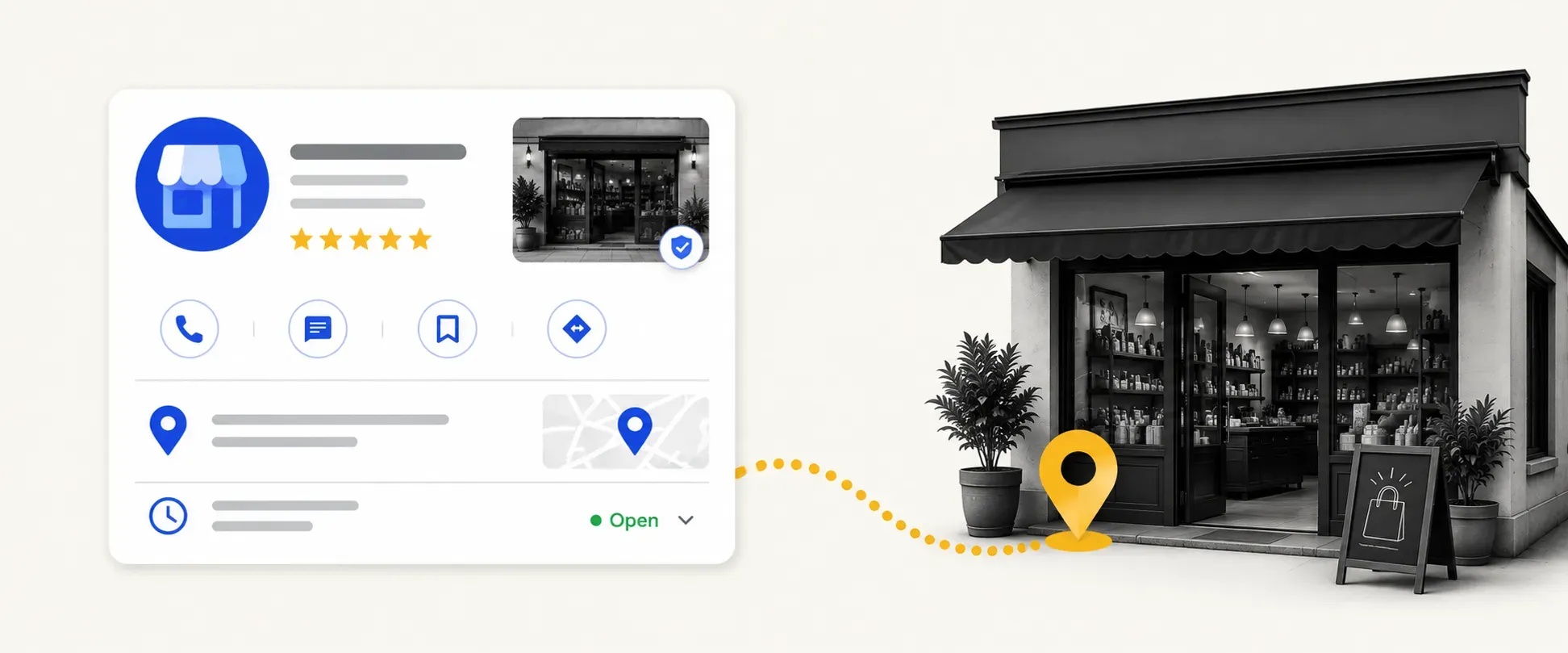
- Google Business Profile
- a phone number shared through referrals
That means the first website purchase is often also the first time the business has to think clearly about structure, copy, mobile usability, ownership, and long-term maintenance.
This is where many buyers get stuck. They end up comparing agencies based on:
- who sounds most confident
- who shows the nicest visuals
- who gives the lowest starting price
Those signals matter less than most people think.
The more useful question is whether the company can help the business become clearer, easier to trust, and easier to contact online.
Some businesses are not yet choosing between providers at all. They are still trying to work out whether a website would add enough beyond Instagram and WhatsApp, which is a different decision from the one in this article.
If that is where you are, start with whether a business in Ghana really needs a website or just a stronger social setup. If the need for a website is already clear but the structure is still fuzzy, it helps to look at what pages a small business website in Ghana usually needs first.
A simple comparison framework you can actually use
Use this scorecard when comparing two or three providers. It is more useful than asking who is “the best.”
| What to compare | What a strong answer looks like | What should worry you |
|---|---|---|
| Similar work | They can show projects close to your business type, audience, or goals | They only show attractive visuals with little context |
| Scope | They can explain pages, features, exclusions, and revision rounds clearly | The proposal is vague and full of general promises |
| Mobile quality | They talk about mobile behavior as a default requirement, not an upgrade | Mobile is barely mentioned |
| Content support | They explain who writes what and how messaging will be shaped | They assume the website will somehow write itself |
| Ownership | They define who owns the domain, hosting, CMS access, design assets, and code | Ownership is unclear or everything stays under the provider |
| Support after launch | They explain fixes, maintenance, response times, and handover | Launch is treated like the end of the relationship |
| Pricing and timeline | They explain what affects price and why timing depends on scope and content | They promise speed or cheap pricing without defining the work |
If one provider is slightly more expensive but answers these questions clearly, that is often the safer choice.
What should you ask on the first call?
The first call should not feel like a pitch meeting only. It should help you test whether the company understands your business and whether they can turn vague needs into a clear project.
Ask these questions early:
- What kind of businesses have you built for that are similar to mine?
- What pages do you think a business like mine actually needs at launch?
- Do you design for mobile first, or do you mainly adapt desktop layouts later?
- What would you need from me before the project starts?
- What is included in your proposal, and what is usually charged separately?
- Who writes the content if I do not have final copy yet?
- What happens after launch if I need edits, support, or training?
- Who owns the domain, hosting account, website files, and admin access?
You do not need perfect answers in the first conversation. But you should come away with the sense that the company can think structurally, not only visually.
How do you judge portfolio quality properly?
Many businesses look at a portfolio and ask only whether the websites look modern.
That misses the more important question of whether the work is actually useful, so it helps to review a portfolio more carefully:
Does the work look relevant to my type of project?
A company that builds strong NGO websites may not be the best fit for a product catalog or school website. A company that does mostly one-page promo sites may not be the best fit for a business that needs trust-building service pages.
Relevance matters more than sheer volume.
Can I understand the business quickly on those sites?
Good portfolio pieces should not only look clean. They should make the client’s offer easy to understand.
Check whether the site helps you answer:
- what the business does
- who it serves
- what action the visitor should take
- whether the site feels trustworthy
How do the sites behave on mobile?
In Ghana, this matters a lot. Many visitors will first see the site on a phone.
Do not only review screenshots on a laptop. Open the portfolio examples on your phone and check:
- readability
- navigation
- contact flow
- load feel
- whether buttons and forms are easy to use
Can the company explain the thinking behind the work?
A strong provider should be able to explain not only what they built, but why.
That includes:
- the problem they were solving
- the page structure they recommended
- what the client needed most
- what tradeoffs were made
If the explanation is mostly “we made it modern and attractive,” keep asking questions.
What should a proposal make clear?
Scope clarity is one of the biggest separators between a smooth project and a stressful one.
A good proposal should make these things easy to understand:
- what pages are included
- whether the website is custom, template-based, or a hybrid
- what features are included now versus later
- whether content writing or editing is included
- whether image sourcing, photography, or graphics are included
- whether basic SEO setup is included
- whether analytics or tracking setup is included
- how many revision rounds are included
- what happens after launch
- what is excluded
This is also where pricing starts to make more sense. A quote becomes easier to judge when you understand how scope, setup, and support affect the total cost, which is why it helps to look at our breakdown of website cost in Ghana.
The broader question of what small businesses in Ghana should actually be paying for in website work sits one level above that.
What timeline promises are realistic?
Timeline promises are often used to impress buyers, but speed only matters if the scope is realistic.
For many simple business websites, a rough range of two to four weeks can be realistic if:
- content is ready
- decisions are made quickly
- the website is not feature-heavy
- the provider already has a clear process
But if the project includes:
- fresh copywriting
- new branding decisions
- custom design exploration
- many pages
- special forms or integrations
- ecommerce
then the timeline should naturally expand.
Long timelines are not automatically a problem. What should make you cautious is a timeline that sounds precise before the company has properly defined the work.
Who should own the domain, hosting, and code?
This is one of the most important questions in Ghana, especially for small businesses buying their first website.
At minimum, the business should have clear control over:
- the domain name
- the hosting account, or at least verified administrative access
- the CMS or website admin login
- email addresses tied to the site
- brand assets used in the project
If the website involves custom development, also ask:
- who owns the code
- whether you will receive a handover
- whether another developer could reasonably take over later
Some providers bundle setup for convenience, and that can help a small business move faster. The problem starts when convenience becomes dependency and the client cannot easily move, update, or even access core accounts later.
If ownership is vague before the project starts, it usually stays vague after launch.
What should post-launch support include?
Many buyers focus so much on launch that they forget the website still needs care after it goes live.
A good company should tell you what support looks like after launch. That may include:
- bug fixes after handover
- small content edits
- plugin or system updates
- backups
- performance checks
- uptime monitoring
- support response times
- training on how to make basic edits yourself
Ask whether support is:
- included for a short period
- available on a monthly plan
- charged per request
Also ask what happens if you do not want ongoing support. There should still be a clear handover path.
What are the most common red flags?
These are the patterns buyers regret later. They also show up repeatedly in real website projects where the early conversations were not clear enough.
The proposal is more polished than the thinking
Some proposals sound premium because they use words like:
- bespoke
- cutting-edge
- premium
- world-class
- conversion-driven
On their own, those words do not tell you much. The useful part is whether the company can define pages, user flow, content responsibilities, and support.
The portfolio is all style, no substance
If every example looks visually impressive but you still cannot tell what the client does or what the site is trying to achieve, that is a warning sign.
The provider avoids ownership questions
If domain, hosting, admin access, or code ownership feel slippery in the conversation, stop and clarify before you move forward.
Everything important is treated as an extra
Some providers quote a low entry price, then add separate charges for things many businesses assumed were part of the project:
- mobile optimization
- basic SEO setup
- contact form setup
- training
- content support
- launch support
That does not always mean the provider is wrong. But it does mean you need a clearer total-cost picture.
They promise speed before understanding the work
“We can finish in three days” may sound attractive, but if the company does not yet know your content, structure, features, or revision needs, the promise is probably not grounded.
A Ghana business scenario that shows the real difference
Imagine a small business in Accra that has been getting leads mainly from Instagram and WhatsApp. The owner decides it is time to build a proper website and compares two providers.
Provider A has a cheaper starting price and a flashy proposal. It talks a lot about premium design, modern look, and fast delivery, but it does not clearly explain:
- what pages are included
- who writes the copy
- how mobile navigation will work
- who owns the hosting
- what happens after launch
Provider B is less dramatic. The proposal is clearer. It lists the homepage, about page, service pages, contact flow, mobile behavior, content responsibilities, basic SEO setup, and post-launch support. It also explains what renews yearly and what the client will control directly.
Provider B may not sound as exciting at first, but it is usually the safer business decision.
Buyer checklist before you decide
Use this checklist before paying a deposit.
- I have compared at least two or three providers
- I understand what pages will be built
- I understand what features are included now and what is excluded
- I know whether the site is custom, template-based, or mixed
- I know who is responsible for the writing
- I have seen live examples on mobile, not only desktop screenshots
- I know who owns the domain and hosting
- I know whether I will receive admin access and handover
- I understand what support happens after launch
- I understand what renews yearly
- I know what changes cost extra
- I know the timeline assumptions, not just the headline deadline
If you cannot tick most of these confidently, you probably need a clearer conversation before you commit.
Frequently asked questions
How many web design companies should I compare?
Two or three serious comparisons are usually enough. Too many options can create noise. The important thing is comparing them on the same criteria, not collecting endless quotes.
Should I choose the cheapest option if I only need a simple website?
Not automatically. A simple site can still fail if the structure is weak, the content is unclear, or the ownership setup is bad. Cheap is only good value when the essentials are still handled properly.
Do I need a company in Ghana specifically?
Not always, but local understanding can help. A provider that understands how Ghanaian businesses often sell, communicate, and get contacted can make better decisions around mobile use, WhatsApp flow, trust, and buyer expectations.
What matters more: design quality or business clarity?
Both matter, but clarity should come first. A beautiful website that does not explain the business properly or guide visitors toward action is still a weak business asset.
What if I do not yet know exactly what pages I need?
That is normal. A strong provider should help you simplify the structure before the build starts, especially around page order, priority, and what can wait until later.
What to do next
If you are comparing options now, use this article as a shortlist framework:
- identify the business goals for the site
- list the pages and must-have features
- compare two or three providers using the scorecard above
- clarify ownership, support, and recurring costs before paying anything
If you want examples first, start with our work.
The Charlie Cobbinah case study shows one project in more detail.